Most crypto trading bots are built for active traders: configure a strategy, run it for weeks, adjust, restart. Stoic.ai is different — it is designed for multi-year deployment. The Stoic Meta algorithm runs continuously without requiring configuration changes, and its value compounds over full market cycles rather than single-trade sequences. For long-term investors who want systematic crypto exposure without active management, it deserves serious consideration.
Try it free
Stoic.ai
Hands-off AI portfolio trading on Coinbase, Binance, and major exchanges. Quantitative strategies built by Cindicator. Used by 18,000+ investors.

Why Long-Term Investors Should Consider Automation
Long-term crypto investors face a specific challenge: crypto moves violently across market cycles, and the behavioral instinct during deep drawdowns (panic selling) destroys long-term returns more than the drawdown itself.
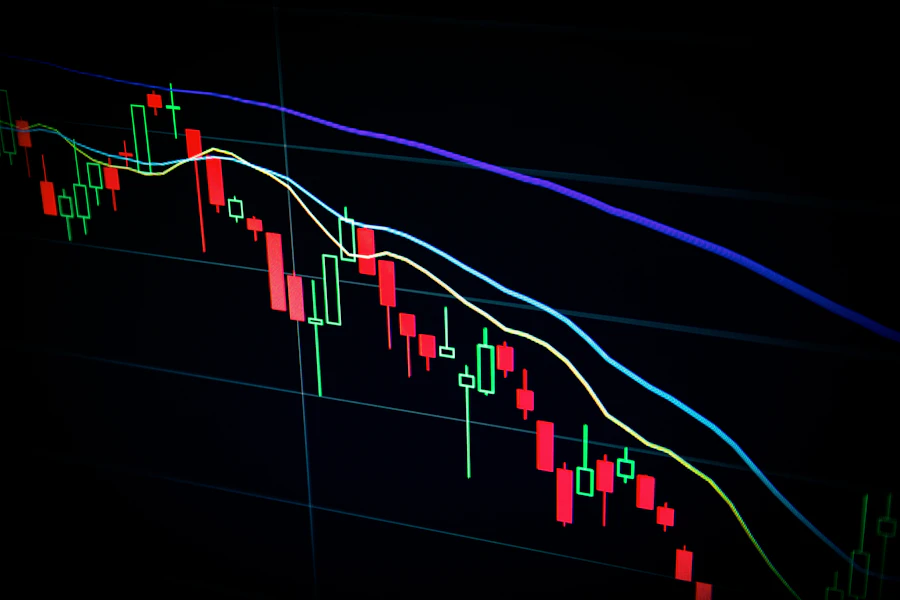
The 2022 bear market saw BTC drop from $69,000 to $15,500 — a 78% decline over 12 months. Investors who sold at $20,000–$25,000 during the decline locked in losses of 65–70%. Those who held through the entire cycle and remained invested through 2023 recovered most of those losses as BTC returned above $40,000.
The challenge: holding through a 78% drawdown requires either extraordinary conviction or emotional detachment. Stoic creates the second option programmatically. You are not making active holding decisions during the drawdown — the algorithm runs, and you’re not required to do anything.
What Long-Term Investors Value in Stoic
Set-and-forget architecture: Unlike configurable bots that require periodic parameter adjustments, Stoic runs without user input after initial setup. Appropriate for investors who want to deploy capital and revisit annually.
Dynamic risk adjustment: The volatility-scaled positioning reduces exposure during high-risk phases automatically. A long-term investor who manually holds through every market event faces the full drawdown magnitude. Stoic systematically reduces exposure, which can limit drawdown depth.
No timing requirement: Long-term investors who buy manually often wait for “the right time” — a behavioral trap that frequently results in buying at cycle tops (when confidence is high) rather than bottoms (when sentiment is negative). Stoic deploys capital systematically regardless of sentiment.
Annual fee model alignment: The 5% annual fee is consistent with a long-term multi-year holding framework. There are no monthly subscription costs that create pressure to generate returns in short windows.
The Multi-Year Compounding Case
Stoic’s annual fee compounds against returns over time:
Year 1: $50,000 portfolio, 5% fee = $2,500. Net portfolio after fee: assume 30% return = $65,000 - $2,500 = $62,500.
Year 2: Fee calculated on $62,500 = $3,125. Assume 25% return = $78,125 - $3,125 = $75,000.
Year 3: Fee calculated on $75,000 = $3,750. Assume 20% return = $90,000 - $3,750 = $86,250.
The fee grows in absolute terms as the portfolio compounds, but the percentage remains fixed at 5%. Over a 3-year period in this scenario, total fees paid: ~$9,375, total portfolio growth: $36,250 net. Fee represents ~26% of gross gains — a meaningful but not crippling cost for a fully managed, zero-attention strategy.
What Stoic Long-Term Investors Experience
Year 1: Stoic deploys capital, makes its first allocation based on Meta strategy signals. The investor sees regular trade activity in their exchange history but doesn’t need to monitor it.
Bear market phase: Portfolio value declines along with crypto markets. Stoic’s volatility management reduces severity. The investor experiences paper losses but doesn’t need to make active sell decisions — a critical advantage for behavioral discipline.
Recovery phase: Stoic captures recovery gains systematically. Investors who held through the drawdown recover. Investors who disconnected Stoic during the drawdown lock in losses.
Year 3+: The compounding effect of consistent management across cycles begins to create separation between Stoic’s equity curve and that of a manual investor who made emotional decisions at market extremes.
Long-Term Investors vs Passive Buy-and-Hold
The honest comparison for long-term investors: is Stoic better than simply buying BTC and holding for 5 years?
Over 2020–2021 bull market: Stoic likely underperformed pure BTC buy-and-hold on peak gains but with lower drawdown. Over 2022 bear market: Stoic likely outperformed buy-and-hold due to risk management. Over a full 4-year BTC halving cycle: uncertain — depends on market character. Stoic’s risk-adjusted returns should be competitive; absolute returns versus a purely passive BTC hold are unclear.
If you are comfortable holding BTC passively through 70–80% drawdowns without selling, buy-and-hold might be a comparable or better long-term strategy without fees. If you have historically sold during drawdowns (most investors do), Stoic’s systematic risk management is worth the 5% cost.
Minimum Recommended Time Horizon
Do not deploy Stoic on a 3–6 month time horizon. The fee paid on day one covers a year. If you exit within 6 months, your effective annual fee rate doubles. More importantly, Stoic’s strategy needs time to work through a full volatility cycle — deploying during a bear market and exiting after 3 months at the bottom is the worst-case scenario.
Minimum recommended time horizon: 12 months. Ideal: 2–3 years covering at least one full bull/bear cycle.
For how Stoic manages your portfolio through these cycles, see How Stoic Meta Strategy Works 2026.
Coinbase Advanced for Long-Term Holdings
Long-term investors benefit from keeping crypto on a regulated, financially stable exchange. Coinbase Advanced — publicly listed on NASDAQ — provides the regulatory standing and financial transparency most consistent with a long-term holding approach.
Recommended exchange
Coinbase Advanced
Up to 3.85% USDC rewards on trading balance, low maker/taker fees, and full Coinbase Advanced toolset.
Monitor Macro Direction While Stoic Runs
Even long-term investors benefit from knowing macro BTC direction. The Free BTC AI Predictor provides daily directional signals — not for day trading, but for context around annual capital addition decisions or renewal timing.
FAQ
Is Stoic appropriate for a “set and forget” investment?
Yes — more so than any configurable bot platform. Stoic requires no ongoing parameter adjustments. Annual fee renewal is the only required action.
How long should I run Stoic for meaningful results?
Minimum 12 months; ideally 2–3 years across a full bull/bear cycle.
Does Stoic reinvest profits automatically?
Yes. Stoic’s daily rebalancing incorporates realized gains back into the managed portfolio, creating a compounding effect.
Can I start with $10,000 and scale up over time?
Yes. Stoic supports incremental capital additions (with prorated deposit fees). Starting at $10,000 on the 5% tier and scaling up as your conviction grows is a sensible approach.
Related on NeuralMindMastery
- Stoic.ai Review 2026
- Stoic.ai for Passive Income 2026
- Stoic.ai Risk Management 2026
- Stoic.ai vs Manual Trading 2026
- Bitcoin Next Bull Run Prediction
- Bitsgap for Passive Income 2026
Past Stoic.ai performance does not guarantee future returns. Crypto trading involves substantial risk including total loss. Not financial advice.